
The Foundation
Movement & Strength
Train for the decades ahead: muscle and mobility that keep you capable for years to come.
The minimum
What the research says is enough to start.
You don't need a gym membership or a perfect plan. Major health organizations agree on a short list of weekly minimums for adults. Here they are, in plain numbers.
150 min
of moderate activity each week
Brisk walking counts. That's about 30 minutes, five days a week. The full range for added benefit is 150 to 300 minutes.
: WHO Guidelines on physical activity and sedentary behaviour (2020) · Physical Activity Guidelines for Americans, 2nd edition (2018)
2 days
of strength training each week
Work all the major muscle groups (legs, hips, back, chest, shoulders and arms) at a level that feels moderately hard or harder.
: WHO Guidelines on physical activity and sedentary behaviour (2020) · Physical Activity Guidelines for Americans, 2nd edition (2018)
6,000–10,000
steps a day, depending on your age
In a 15-study analysis, risk kept falling until about 6,000 to 8,000 steps a day for adults 60 and over, and about 8,000 to 10,000 for younger adults. Start where you are and work up.
Any
amount is better than none
If the numbers feel far away, start with what you can do. Every bit of movement counts toward the total.
: WHO Physical activity fact sheet · Physical Activity Guidelines for Americans, 2nd edition (2018)
The research
Why strength training is not optional.
Most people think of walking or running first. The research says strength training deserves a place beside it, and it takes less time than you might expect.
A small weekly dose pays off
A review of 16 long-term studies found that people who did muscle-strengthening activity had roughly 10 to 20 percent lower risk of dying from any cause, with the biggest gains at about 30 to 60 minutes a week. This held regardless of how much aerobic exercise they did.
Two sessions a week is the standard
The World Health Organization and the U.S. Physical Activity Guidelines both say adults should strengthen all major muscle groups on 2 or more days a week, in addition to the aerobic minimum.
: WHO Guidelines on physical activity and sedentary behaviour (2020) · Physical Activity Guidelines for Americans, 2nd edition (2018)
Beginners don't need to push to exhaustion
The American College of Sports Medicine's 2026 position stand, a large review of the evidence, says training to failure is not necessary. It suggests stopping with 2 to 3 repetitions still in the tank. Two sets per exercise beat one set, but one set beats none, and it's safe for healthy adults of all ages.
: ACSM Position Stand, Currier et al., Medicine & Science in Sports & Exercise (2026)
Walking more adds up, with a ceiling
Across 15 international studies, more daily steps meant lower risk of early death, leveling off at about 6,000 to 8,000 steps for adults 60 and over and 8,000 to 10,000 for adults under 60.
Example for beginners
An example first four weeks.
This is an example of what a beginner's first four weeks could look like, not a prescribed plan or clinical protocol. It builds toward the minimums in the guidelines above without burning out. Adjust it to your life. Consistency matters more than speed.
Week 1
Just move
Walk for 10 minutes, three or four days. Try one short strength session using the workout below, with only one set of each move.
Week 2
Make it a rhythm
Walk 15 to 20 minutes on most days. Do your strength session twice this week, with a rest day between them.
Week 3
Add a second set
Walk 20 to 30 minutes, four or five days. Do two sets of each strength move, twice this week.
Week 4
Reach the minimum
Aim for about 150 minutes of brisk walking and two full strength sessions. You're now meeting the guidelines. Then keep going.
Your first workout
A first strength workout you can do at home.
About 20 to 30 minutes, no equipment required. Each move works a large group of muscles, and each can be made easier or harder.
- 1
Sit to stand
Stand up from a sturdy chair and sit back down slowly. Works legs and hips.
- 2
Counter push-up
Hands on a kitchen counter, body straight, lower your chest and press back. Works chest, shoulders and arms.
- 3
Hip bridge
Lie on your back, knees bent, and lift your hips. Works glutes and the back of the legs.
- 4
Bent-over row
Hinge forward and pull a backpack or water jug toward your ribs. Works the back and arms.
- 5
Step-up
Step onto a low, stable step and back down. Works legs, hips and balance.
- 6
Plank or farmer's carry
Hold a plank on your knees, or walk while carrying a bag in each hand. Works the core.
How to do it
- Do 8 to 12 repetitions of each move. Complete the whole circuit once, then twice when you're ready.
- Pick a level where the last few reps feel hard but your form stays good. Stop about 2 or 3 reps before you couldn't do another.
- Train twice a week with at least a day of rest between sessions.
- When you can do the top of the range comfortably, make it harder in small steps: slow down, add weight, or choose a tougher version. The ACSM suggests raising the load by 2 to 10 percent.
: ACSM Position Stand: Progression models in resistance training for healthy adults (2009) · ACSM Position Stand, Currier et al., Medicine & Science in Sports & Exercise (2026)
Helpful tools
Products that can support your training.
Training, food and sleep do the heavy lifting, and the right products can add extra support. Here are five examples from the brands we work with, and how each one can fit your routine. The best way to find what fits you is the starter assessment.
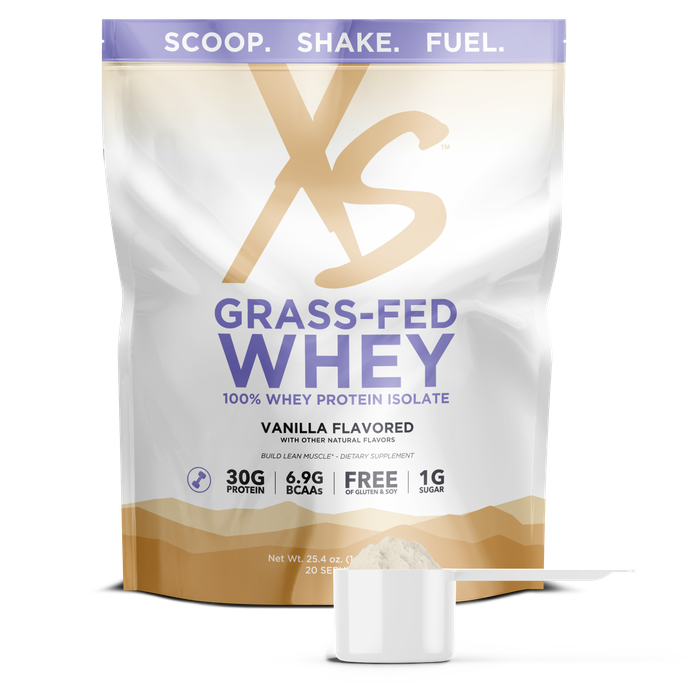
Protein powder
XS™ Grass-Fed Whey Protein
A whey protein isolate made from the milk of grass-fed cows, free of gluten and soy, with no artificial colors, flavors or sweeteners.
- 30 g protein and 6.9 g BCAAs per serving
- 1 g sugar
- 20 servings per pouch
How it can fit your routine
Strength training works best with enough protein, and a shake is an easy way to get it after a workout or at a meal you tend to skip. In a review of 49 studies, adding protein supplements to resistance training modestly increased strength and lean muscle. With 30 g of whey protein in every serving, it's a simple way to support your training.
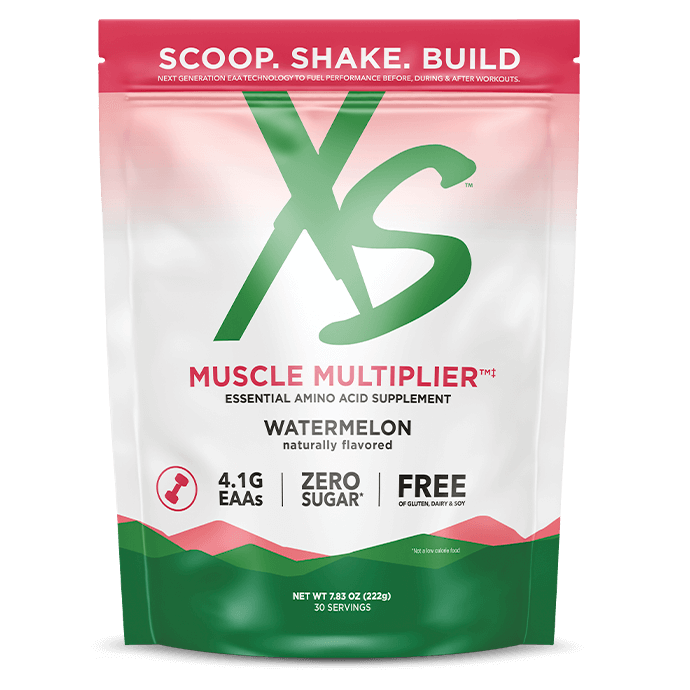
Essential amino acid powder
XS™ Muscle Multiplier
A flavored powder made with a blend of essential amino acids, including L-arginine, to mix with water. It's sugar-free, caffeine-free and gluten-free, and NSF Contents Certified.
- 4.1 g amino acid blend and 25 calories per serving
- 0 g sugar, with watermelon and berry flavors
- 30 servings per pouch
How it can fit your routine
Essential amino acids are the building blocks your body can't make on its own, and they're what protein is made of. This sugar-free, caffeine-free powder is easy to sip around a workout or between meals on busy days, and it's NSF Contents Certified.
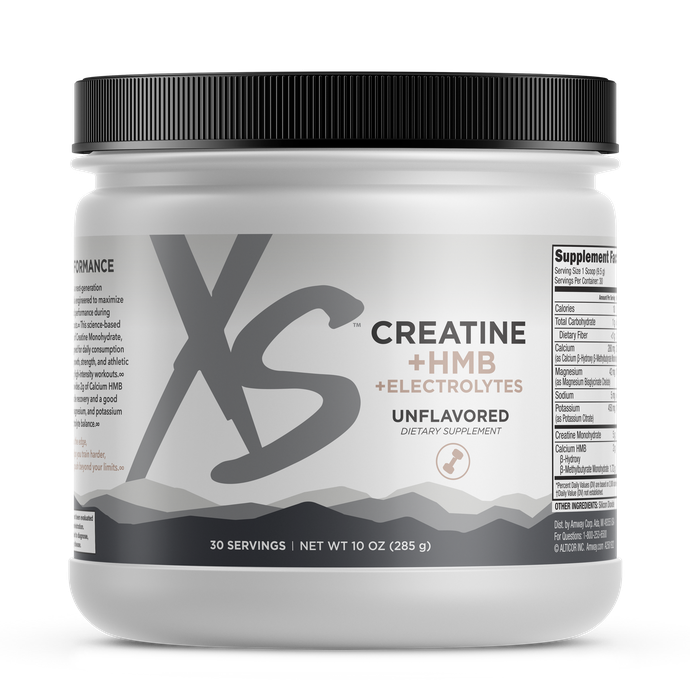
Creatine and calcium HMB
XS™ Creatine+
An unflavored, unsweetened powder that combines creatine with calcium HMB and three electrolytes, designed to mix into a drink you already enjoy.
- 5 g creatine monohydrate and 2 g calcium HMB per scoop
- Magnesium and potassium electrolytes
- 30 servings per container
How it can fit your routine
Creatine is one of the most studied sports supplements. The International Society of Sports Nutrition's review reports that it can improve high-intensity exercise performance and training adaptations, and that it has been well tolerated in healthy people, including older adults, over long periods. For a beginner, that can mean getting a little more out of the strength sessions you're already doing.
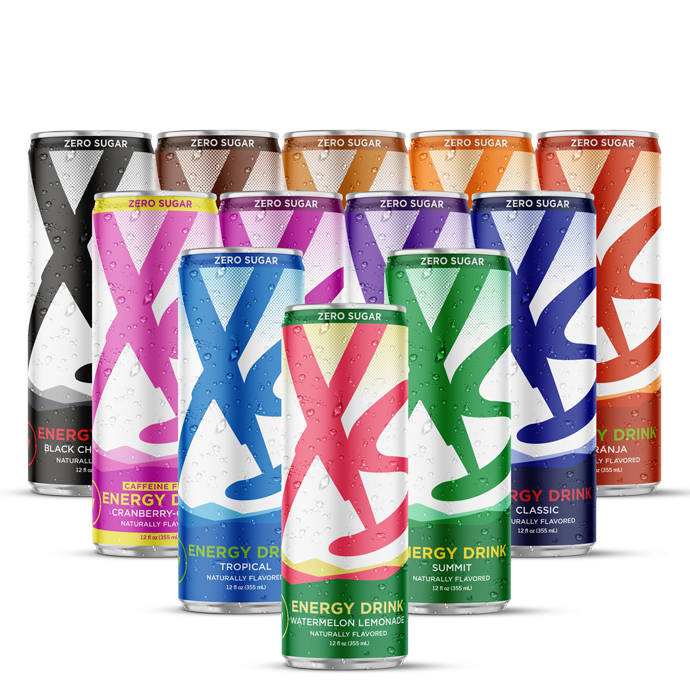
Zero-sugar energy drink
XS™ Energy Drink
A ready-to-drink energy drink made with zero sugar and naturally flavored, in a range of flavors from Citrus and Tropical to Black Cherry Cola and Root Beer. It's sugar free, dairy free and lactose free.
- 114 mg caffeine and a high dose of B vitamins per can
- Zero sugar, with only 15 calories
- 12 oz cans in a range of flavors
How it can fit your routine
Showing up energized makes workouts better. In an umbrella review of 21 meta-analyses, caffeine improved aerobic endurance, muscle strength, muscle endurance, power and speed. With 114 mg of caffeine, a high dose of B vitamins and zero sugar for only 15 calories, it's an easy pre-workout lift in a flavor you'll enjoy, and having it earlier in the day keeps your sleep on track.
Recovery drink mix
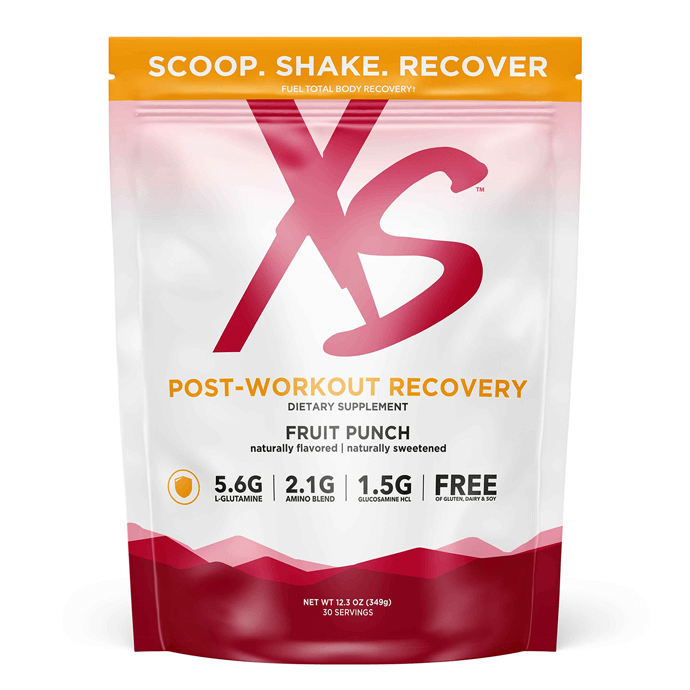
XS™ Post-Workout Recovery
A drink mix in single-serve stick packs, made with L-glutamine, an essential amino acid blend, glucosamine and turmeric, and naturally flavored with no sugar.
- 5.6 g L-glutamine and 2.1 g amino acid blend per stick
- 1.5 g glucosamine and 80 mg turmeric extract
- 12 stick packs per box
How it can fit your routine
New strength training can leave muscles and joints feeling it. A pre-measured stick pack makes it easy to build a simple habit of refueling after every session, wherever you are, with L-glutamine, amino acids, glucosamine and turmeric in a naturally flavored, sugar-free drink.
Facts come from the manufacturer's product labels. These statements have not been evaluated by the Food and Drug Administration. These products are not intended to diagnose, treat, cure or prevent any disease. Talk with your doctor before starting a supplement, especially if you have a health condition, take medication, or are pregnant or nursing.
Starter assessment
Make Movement & Strength fit your life.
Not sure where to start? Tell us where you are today with a few quick questions. Your answers come straight to us, and Levi will reach out personally to talk about what fits your life.
Common questions
Questions people ask before they start.
Do I need a gym?
No. Your own body weight, a chair, a counter and a backpack are enough to meet the guideline. A gym or a set of bands simply gives you more ways to progress later.
Will I get sore?
Mild soreness for a day or two after a new workout is normal. Sharp or joint pain isn't. Ease off and choose an easier version of the move.
I only have a few minutes. Does it still count?
Yes. Short bouts add up toward the weekly total, and the guidelines say any amount of activity is better than none.
: WHO Physical activity fact sheet · Physical Activity Guidelines for Americans, 2nd edition (2018)
What if I'm older, or it's been years?
Resistance training is safe for healthy adults of all ages, and the WHO recommends adding balance and functional exercises about three days a week for adults 65 and over. Start lighter and build slowly.
: WHO Physical activity fact sheet · ACSM Position Stand, Currier et al., Medicine & Science in Sports & Exercise (2026)
Read the research yourself.
- WHO Guidelines on physical activity and sedentary behaviour (2020)
- WHO Physical activity fact sheet
- Physical Activity Guidelines for Americans, 2nd edition (2018)
- Momma et al., British Journal of Sports Medicine (2022)
- Paluch et al., The Lancet Public Health (2022)
- ACSM Position Stand, Currier et al., Medicine & Science in Sports & Exercise (2026)
- ACSM Position Stand: Progression models in resistance training for healthy adults (2009)
- Morton et al., British Journal of Sports Medicine (2018)
- ISSN position stand on creatine, Kreider et al., Journal of the International Society of Sports Nutrition (2017)
- Grgic et al., British Journal of Sports Medicine (2020)
Explore the other pillars.
Nutrition
Learn moreSleep & Recovery
Learn moreMindset
Learn more